
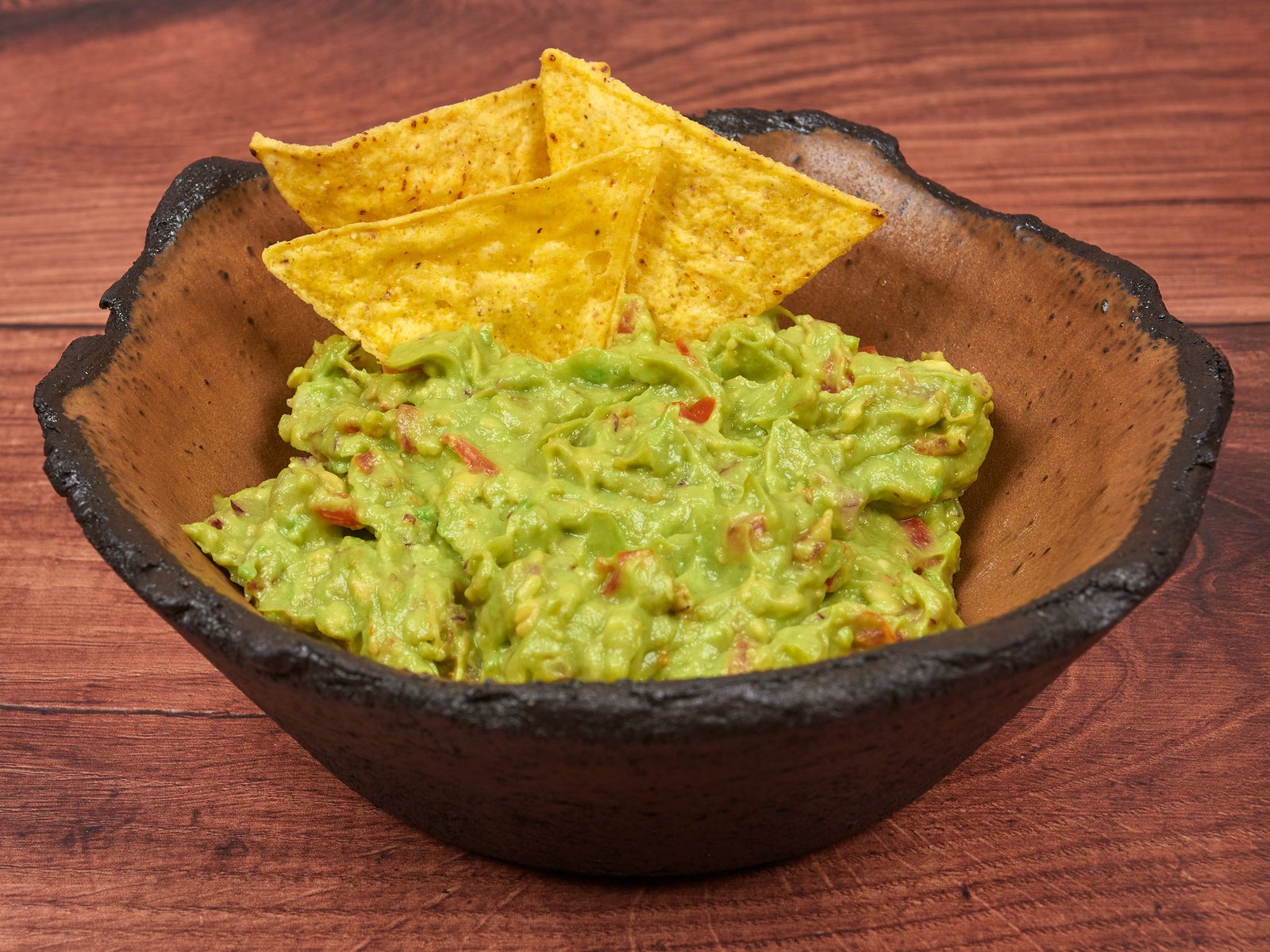
Guacamole is a classic dish from Mexican and American cuisine that has become increasingly popular across Europe in recent years. It’s an avocado-based preparation that belongs to a category of foods known in English as dips — creamy mixtures in which you can dunk foods such as nachos, or crudités (carrot sticks, bell pepper strips, celery, and so on).
Dips occupy a special place in the culinary world: they’re usually thicker than sauces but lighter than spreads such as our traditional vegetable pâtés. The boundaries between these categories can be quite subtle, though. While guacamole and salsa come from the Americas, there’s a rich variety of dips in Mediterranean cuisine too — think tzatziki or taramosalata — as well as in Middle Eastern cooking, where hummus, baba ghanoush, and labneh are among the best-known examples.
In my country, guacamole became familiar through cinema snack bars, where nachos were introduced as an alternative to popcorn — often served with cheese sauce, a true calorie bomb. Guacamole, on the other hand, is a much healthier option and a great choice for a movie night at home. Its main ingredient, avocado, is packed with nutrients and offers a wide range of health benefits.
To make a delicious guacamole, you’ll need ripe avocados — soft and creamy, but not turning black inside. The easiest way is to buy them while still firm and let them ripen for two or three days. Keeping a few bananas nearby speeds up the process, as ripe bananas release ethylene gas, which helps avocados soften more quickly.
You’ll also need tomatoes, red onion, lime juice, a jalapeño (or any green hot pepper available locally), and optionally, fresh coriander (cilantro).
A note on coriander: some people can’t stand its flavour due to genetics. Research suggests that a variation of the OR6A2 gene affects how certain aromas are perceived, making coriander taste unpleasant — often described as soapy or musty. Since coriander leaves are not traditionally used in European cuisines, there’s a fair chance you might be one of those people. If you don’t like it, simply leave it out — your guacamole will still taste wonderful without it.
ad
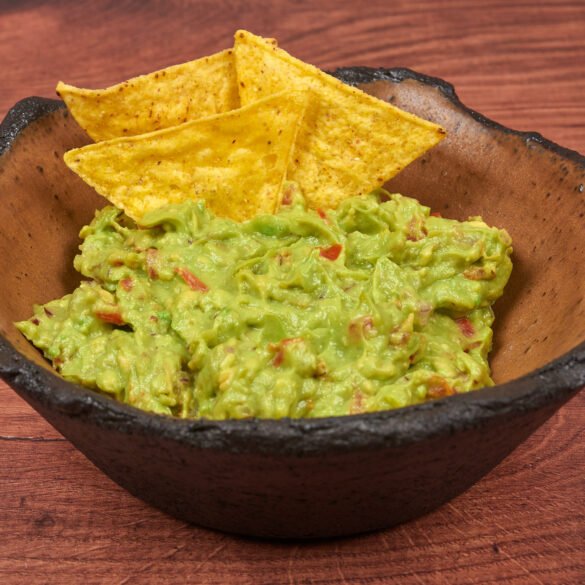
Ingredients
- 2 large ripe avocados (or 3 small ones)
- 1 tomato
- 1 small red onion
- 1 lime
- 1 jalapeño pepper
- 1 garlic clove (optional)
- ½ bunch fresh coriander (see note below)
- Salt, to taste
Instructions
Although the avocado skin isn’t edible, I always give the fruit a quick rinse under cold running water to remove any dirt or bacteria that might transfer to the flesh when cutting.
Place the avocado on a chopping board and slice it lengthwise, rotating the knife around the stone in the centre. You’ll end up with two halves. Gently tap the stone with the knife so the blade sticks slightly, then twist to lift it out.
The easiest way to separate the flesh from the skin is with a spoon — just slide it between the skin and scoop the flesh out.
Put the avocado into a bowl and mash it with a fork or a potato masher. Don’t overdo it — guacamole should have a bit of texture, with some small chunks of avocado still visible.
Squeeze over the lime juice straight away to prevent the avocado from oxidising and turning brown.
Cut the tomato in half and scoop out the seeds and pulp, keeping only the firm outer part. A watery tomato can spoil the texture. Dice the tomato finely and add it to the avocado.
Peel the red onion, chop it finely, and add it to the mix.
Optionally, add some finely chopped jalapeño, a crushed garlic clove, and a handful of chopped fresh coriander (or parsley if you prefer).
Mix everything together, season with salt to taste, and refrigerate for about 30 minutes to let the flavours blend.
Serve chilled with nachos or fresh vegetable sticks.
Notes
If you don’t have limes, you can use the juice of half a lemon instead.
If you hate coriander, simply replace it with parsley or leave it out altogether — the guacamole will still taste great.